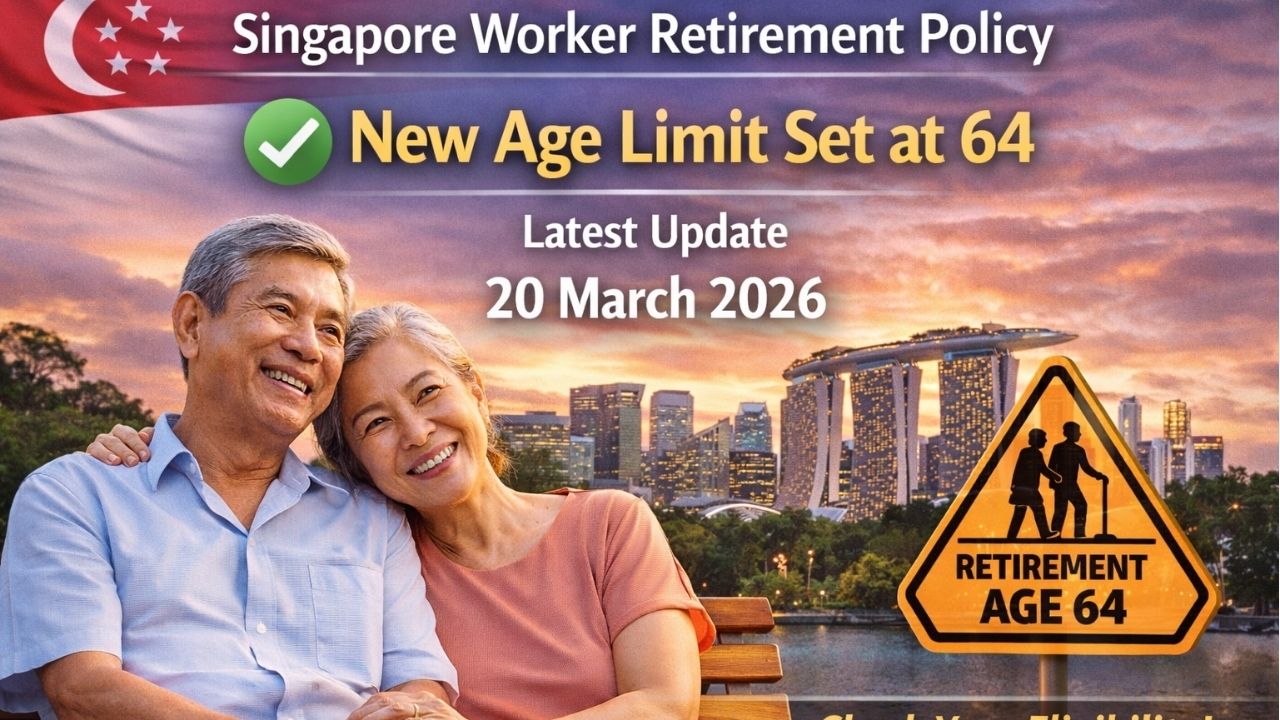
Singapore Worker Retirement Policy: New Age Limit Set at 64 is an important change in the country’s employment framework aimed at supporting older workers and adapting to an aging population. The Singapore government has announced that the statutory retirement age will increase from 63 to 64 starting from 1 July 2026, allowing employees to remain in the workforce longer if they wish. :contentReference[oaicite:0]{index=0}
This policy update is part of a long-term strategy to strengthen retirement security and maintain a sustainable workforce. Along with the retirement age increase, the re-employment age will also rise from 68 to 69, giving older employees additional opportunities to continue working after reaching retirement age. :contentReference[oaicite:1]{index=1}
What Is the New Retirement Age in Singapore?
Under the updated retirement policy, the minimum retirement age in Singapore will increase to 64 from 1 July 2026. This means employers cannot require employees to retire before reaching this age. :contentReference[oaicite:2]{index=2}
The change applies mainly to workers born on or after 1 July 1963 and forms part of the government’s phased plan to gradually increase retirement ages in response to longer life expectancy. :contentReference[oaicite:3]{index=3}
| Policy Element | Current Age | New Age from July 2026 |
|---|---|---|
| Retirement Age | 63 Years | 64 Years |
| Re-employment Age | 68 Years | 69 Years |
What Is Re-Employment Age?
Re-employment age refers to the age up to which employers must offer eligible workers the opportunity to continue working after they reach the official retirement age.
From July 2026, companies in Singapore will be required to offer re-employment to suitable employees up to the age of 69 if they meet certain criteria such as satisfactory performance and medical fitness. :contentReference[oaicite:4]{index=4}
- Employee must be a Singapore citizen or permanent resident
- Must have satisfactory work performance
- Must be medically fit to continue working
- Must have served the employer for a required minimum period
Why Singapore Is Increasing the Retirement Age
The government has gradually increased retirement and re-employment ages to adapt to demographic and economic changes. Singapore has one of the fastest aging populations in Asia, making workforce participation among older citizens increasingly important. :contentReference[oaicite:5]{index=5}
By allowing employees to work longer, the policy helps both workers and employers maintain productivity and financial stability.
- Support an aging workforce
- Allow seniors to continue earning income
- Help companies retain experienced workers
- Improve retirement financial security
Does the Retirement Age Affect CPF Payouts?
One common question among workers is whether the new retirement age will affect CPF retirement payouts. According to official information, the CPF payout eligibility age remains unchanged at 65.
This means workers can still start receiving CPF LIFE retirement payouts at age 65 even though the statutory retirement age is increasing. :contentReference[oaicite:6]{index=6}
| Category | Age |
|---|---|
| Retirement Age (2026) | 64 Years |
| Re-employment Age (2026) | 69 Years |
| CPF Payout Eligibility Age | 65 Years |
Future Retirement Age Plans
The 2026 retirement age change is part of a long-term roadmap announced earlier by the government. Authorities aim to gradually increase retirement and re-employment limits over time.
- Retirement age expected to reach 65 by 2030
- Re-employment age expected to reach 70 by 2030
- Policy designed to support longer careers
- Encourages lifelong employment opportunities
This gradual approach gives workers and employers enough time to adapt to the new retirement framework.
Impact on Workers and Employers
The increase in retirement age provides additional protection for older employees because companies cannot force them to retire earlier than the legal retirement age.
For employers, the policy means planning workforce management more carefully and providing opportunities for older workers to stay employed longer.
- Older employees can work longer if they choose
- Employers can retain experienced staff
- Helps address labor shortages
- Supports retirement income security
Conclusion
The Singapore retirement policy update raising the retirement age to 64 from July 2026 represents a major step in adapting to the country’s aging population and evolving workforce needs. Along with the increase in re-employment age to 69, the policy gives older workers greater opportunities to remain active in the labor market.
By gradually increasing retirement limits, Singapore aims to ensure long-term workforce sustainability while helping workers maintain financial stability in their later years.
Frequently Asked Questions (FAQs)
1. What is the new retirement age in Singapore?
The retirement age will increase from 63 to 64 starting on 1 July 2026.
2. What is the re-employment age in 2026?
The re-employment age will increase from 68 to 69 from July 2026.
3. Will CPF payout age change due to the new policy?
No, the CPF payout eligibility age will remain at 65.
4. Who is affected by the new retirement age rule?
The change mainly applies to employees born on or after 1 July 1963.
5. Will the retirement age increase again in the future?
Yes, the government plans to gradually raise the retirement age to 65 and the re-employment age to 70 by 2030.