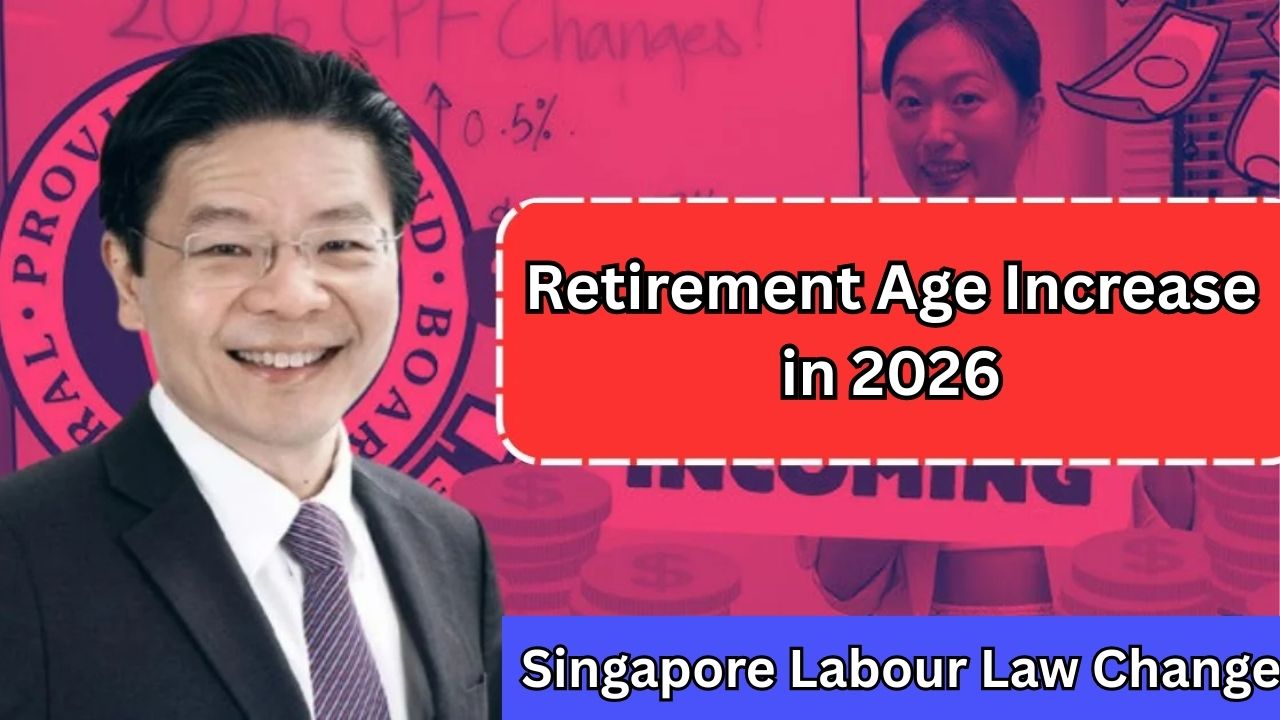
Singapore Labour Law Change: Retirement Age Increase in 2026 is becoming an important topic for workers and employers across the country. The Singapore government has announced changes to the retirement policy that will take effect in 2026. Under the new rule, the official retirement age will increase, allowing employees to remain in the workforce longer while also giving businesses the opportunity to retain experienced workers.
This update is part of Singapore’s long-term workforce strategy aimed at supporting older employees and strengthening retirement security. The government has been gradually adjusting retirement policies so that workers can continue contributing to the economy while improving their financial stability before retirement.
What Is the New Retirement Age in Singapore in 2026?
Starting from July 2026, the statutory retirement age in Singapore will increase from 63 years to 64 years. This means employers cannot require employees to retire before they reach this age.
Along with the retirement age increase, the re-employment age will also be raised from 68 to 69 years. This allows older workers who are willing and able to work to continue employment under re-employment arrangements.
| Policy | Current Age | New Age (From 2026) |
|---|---|---|
| Retirement Age | 63 Years | 64 Years |
| Re-employment Age | 68 Years | 69 Years |
| Future Target | — | 65 Retirement / 70 Re-employment |
Why Singapore Is Increasing the Retirement Age
The decision to raise the retirement age is mainly influenced by Singapore’s ageing population and increasing life expectancy. Many workers today are healthier and capable of working longer compared to previous generations.
By extending the retirement age, the government aims to help older workers stay economically active and maintain financial stability while supporting the country’s workforce needs.
- Increasing life expectancy among citizens
- Need for a sustainable workforce
- Encouraging active ageing
- Helping workers build larger retirement savings
- Allowing companies to retain experienced employees
Impact of the New Retirement Age on Employees
The retirement age increase provides several benefits for workers who wish to continue their careers. Employees will have more time to work, earn income and strengthen their retirement savings.
The new policy also ensures that workers are protected from being forced into retirement before reaching the official retirement age.
- More years of employment opportunity
- Higher potential retirement savings
- Improved financial security before retirement
- Legal protection from early retirement
- Opportunity for flexible or part-time work
How the Re-Employment System Works
Singapore follows a re-employment framework where employees reaching retirement age may continue working if they meet certain conditions. Employers are required to offer re-employment to eligible workers so they can stay employed beyond the retirement age.
Re-employment contracts are generally offered for a fixed period and may be renewed depending on job performance and company requirements.
- Employee must have satisfactory work performance
- Employee must be medically fit for work
- Employee must meet the company’s employment conditions
Impact on Employers and Businesses
The retirement age increase also affects employers who will need to adapt their workforce planning strategies. Companies may introduce flexible roles and workplace policies to accommodate older employees.
Many organizations are already adjusting their human resource policies to ensure a supportive environment for an ageing workforce.
- Workplace adjustments for older employees
- Flexible work arrangements
- Skills training and development programs
- Long-term workforce planning
Does the Retirement Age Change Affect CPF Payouts?
A common concern among workers is whether the retirement age increase affects CPF retirement payouts. The CPF payout eligibility age remains unchanged.
Workers can still start receiving CPF retirement payouts at age 65, regardless of the statutory retirement age adjustment.
Future Retirement Age Plans in Singapore
The 2026 policy change is part of a gradual plan to adjust retirement and re-employment ages over the coming years. The government intends to slowly increase these limits so that both workers and employers can adapt comfortably.
| Year | Retirement Age | Re-employment Age |
|---|---|---|
| Before 2026 | 63 | 68 |
| 2026 | 64 | 69 |
| Target by 2030 | 65 | 70 |
How Workers Can Prepare for the Change
With the retirement age gradually increasing, workers should plan their careers and finances accordingly. Preparing early can help individuals benefit from longer employment opportunities.
- Upgrade professional skills regularly
- Plan long-term retirement savings
- Stay informed about employment policies
- Maintain good health for longer working years
- Explore flexible work options
Conclusion
The Singapore retirement age increase in 2026 reflects the country’s efforts to adapt to demographic changes and workforce needs. By raising the retirement age and extending re-employment opportunities, the policy supports both workers and businesses while encouraging longer and more productive careers.
This gradual adjustment allows employees to remain active in the workforce and strengthen their financial security before retirement.
Frequently Asked Questions (FAQs)
1. What is the new retirement age in Singapore in 2026?
The retirement age will increase from 63 to 64 starting in 2026.
2. What will be the re-employment age after the change?
The re-employment age will increase from 68 to 69 years.
3. Does the retirement age increase affect CPF payouts?
No, CPF payouts can still begin at age 65.
4. Can employees continue working after retirement age?
Yes, eligible employees may receive re-employment offers from their employers.
5. Will the retirement age increase again in the future?
The government plans to gradually increase the retirement age to 65 and re-employment age to 70 by 2030.